







Search Results for: business hours
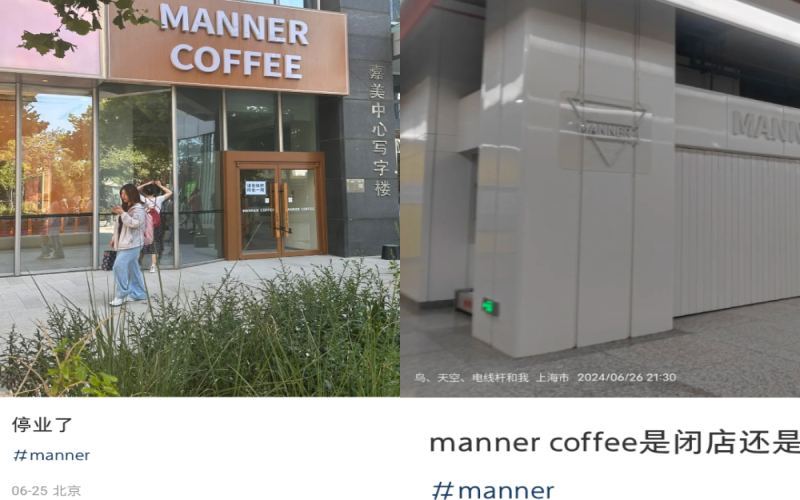
Manner stores see sudden wave of temporary closures: internal staffing adjustments and shortened business hours draw attention
Recently, many consumers have noticed that Manner coffee shops near them have suddenly closed their doors, showing "resting" on the mini-program, with no clear notice and no timetable for resuming business. It is understood that this phenomenon is closely related to Manner's internal personnel adjustments: baristas with excessive working hours are arranged to take leave, while those with insufficient hours are transferred to other stores for support, resulting in some stores having to temporarily close. At the same time, the brand has also shortened the operating hours of some stores, with morning shifts starting later and evening shifts ending earlier. Whether this adjustment can allow Manner to find a balance between chain expansion, specialty quality, and affordable positioning has become a focal point of industry attention. [more…]
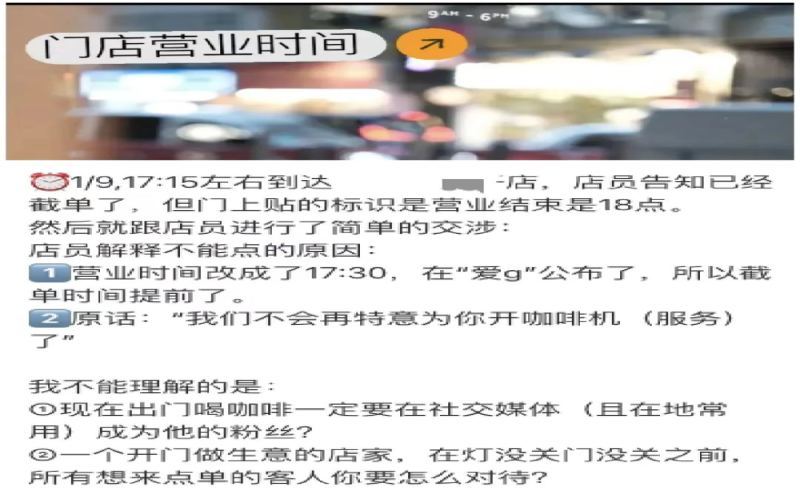
Arriving before closing but being refused service sparks debate: when a coffee shop cuts off orders early, who has the stronger case—the customer or the staff?
Near closing time, the coffee machine has already been cleaned, and at that moment a customer walks in through the door asking if they can have a cup of coffee—such a scene is not uncommon in the coffee industry. Recently, some consumers have reported that they arrived at a coffee shop before the end of business hours to place an order but were refused, with staff saying that the store had already cut off orders early and that the coffee machine would not be turned back on after cleaning. The incident sparked heated discussion online: one side believes that customers should be served during business hours, while the other side sympathizes with coffee workers who do not want to work overtime. How should coffee shops balance service and operations? And how should similar situations be handled properly? This article compiles views from various parties for the reference of coffee enthusiasts. [more…]

Opening a coffee shop requires waking up early? The logic behind the ever-earlier opening hours of independent cafés
Once upon a time, opening a coffee shop was seen as the ideal way to escape the 996 grind and enjoy a slow life. However, upon truly stepping into this industry, many shop owners find reality vastly different from their imagination—early rising becomes an unavoidable daily routine. In recent years, the opening hours of independent cafes have been getting earlier and earlier, with some even lighting up at six in the morning to welcome customers. What is driving this wave of competition over early-morning coffee? How are chain brands and private shops each responding? From the consumer habit of coffee in the morning and alcohol at night to the late-night needs of special professions, the survival model of coffee shops is quietly changing with customer demands. This article will take you through the story behind the changes in business hours in the coffee industry. [more…]
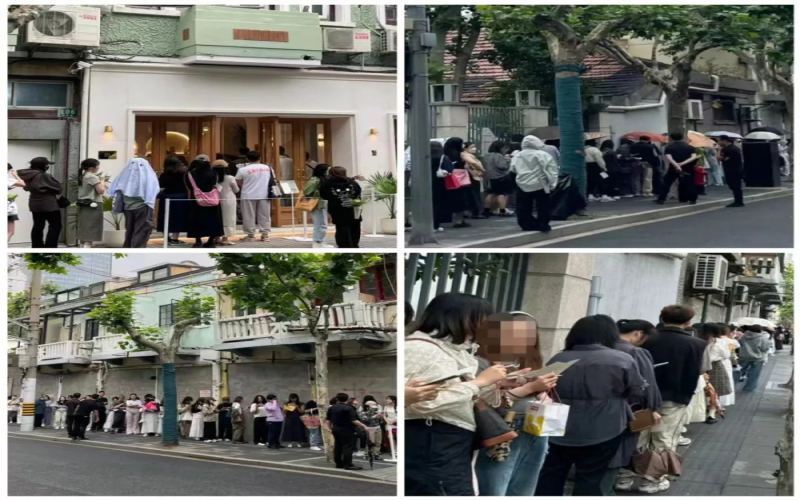
Bai Jingting's streetwear brand GOODBAI opens a coffee shop, drawing fans who queue for three hours as celebrities rush into the coffee business
Today's young people have a great passion for running coffee shops, and this trend has also spread to the entertainment industry. JJ Lin previously opened several Miracle Coffee stores in China, and subsequently many celebrities followed suit, launching their own coffee brands. Recently, the trendy brand GOODBAI founded by actor Bai Jingting officially opened a coffee shop. On the opening day, a long queue formed before the store even opened, becoming a noticeable scene on Yanqing Road. Most of the people in the queue were fans of Bai Jingting, and some waited up to three hours just to buy a cup of coffee. Similar scenes occurred when Wang Hedi's D.DESIRABLE coffee shop opened, and the coffee shop that Jay Chou is preparing in Beijing has also kept fans eagerly anticipating. Are celebrities leveraging their fame to enter the highly competitive coffee market seriously doing coffee, or do they have other motives? This article will take you to find out. [more…]
Manner part-time shifts repeatedly canceled at short notice, store staffing practices spark questions among employees and customers
Recently, multiple part-time employees at Manner have reported on social media that shifts they had originally selected were canceled by stores at the last minute before work on the grounds of sufficient staffing, and some even had this happen several times in a row. At the same time, some full-time employees have also revealed that stores adjust shifts at will according to how busy they are, arranging long continuous shifts when busy and cutting hours when quiet. Some analysts believe that because part-time hourly wages are higher than full-time ones but the work is more oriented toward packing and cleaning, stores may be more inclined to reduce part-time positions in order to control labor costs. As of now, Manner has not yet responded officially, and this series of scheduling chaos is chilling many young people who are interested in joining. [more…]

Nanjing's Grandma Han's 10-yuan pour-over coffee unexpectedly goes viral, Nestlé promises free supplies and invites her to livestream
A small shop in Nanjing called "Aunt Han's Sugarcane Juice" quickly became famous online for its 10-yuan pour-over coffee. The owner, Aunt Han, brews it on the spot using three sticks of Nescafe instant coffee, attracting a large number of young people to line up and check in. Less than 48 hours after it went viral, Nescafe instant coffee sold out, and there was even a shortage of boiling water. Aunt Han said that although the coffee business is low-profit but high-volume, she has always done business honestly. As traffic poured in, the phenomenon of insincere customers skipping out on payment also drew attention. Nescafe officially responded quickly, not only changing the product promotion cover to "the same coffee as Nanjing's 10-yuan granny," but also arranging free offline supply and inviting Aunt Han to participate in a livestream. Front Street Coffee continues to follow this incident and bring readers the latest report. [more…]
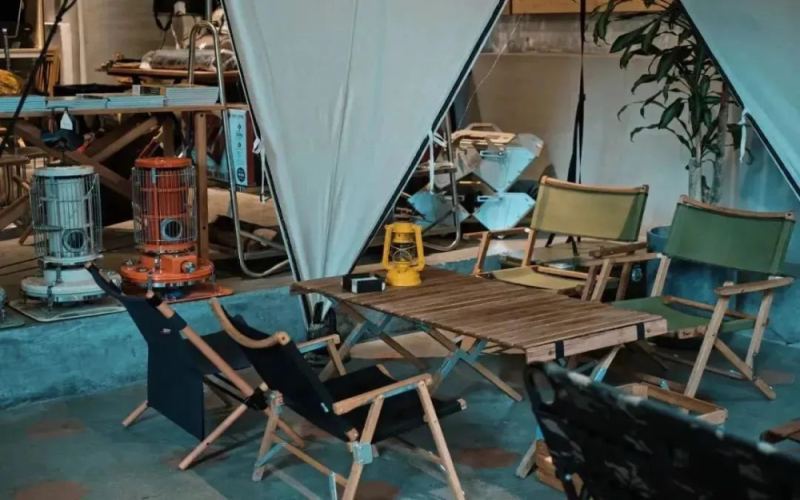
Ten camping chairs stolen from a Huangshan coffee shop in the early hours; surveillance captures the whole process, police urge businesses to step up precautions.
In recent years, camping-style furniture has become wildly popular in the food and beverage industry, with lightweight, portable folding tables and chairs that create a strong atmosphere having become almost standard equipment for coffee shops. However, these convenient and practical pieces of furniture have also become a hot target for thieves. A coffee shop in Huangshan, Anhui, fell victim to a bizarre theft — not a cent of cash was touched, but ten camping chairs in the courtyard vanished without a trace. After reviewing surveillance footage, police uncovered a truth that was both exasperating and laughable: a couple passing by late at night sat down to rest, found the chairs so comfortable that they spontaneously decided to carry them off. This case reflects the widespread loopholes in theft prevention management among coffee shop owners and has also drawn industry attention to the safety of camping-style furniture. [more…]
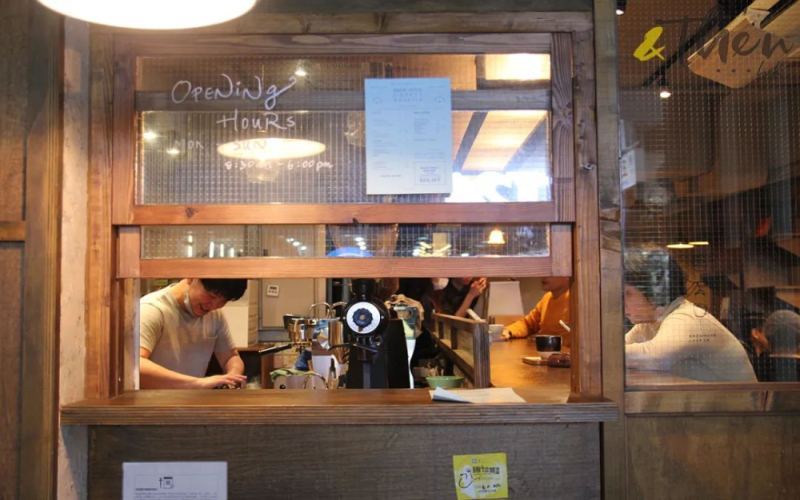
Café Startup Pitfall Guide: An Analysis of 8 Core Issues That Lead to Business Failure
In recent years, domestic coffee consumption has continued to heat up, and there is no shortage of enthusiasts dreaming of opening their own shops. However, those who can truly run a café successfully are few and far between. Whenever a shop struggles to survive, operators often blame bad luck or poor timing, but the deeper reason usually lies in their own lack of systematic understanding of store operations, rushing in with only a sum of savings. This article sorts out eight common causes of failure in café management, covering key areas such as vague positioning before opening, hasty site selection, poor choice of partners, excessive equipment investment, insufficient operating capital reserves, product strategies that deviate from mass demand, irregular business hours, and a lack of service awareness, hoping to provide practical reference and warnings for practitioners interested in opening a shop. [more…]

Students sitting for long hours in cafes and occupying seats sparks debate, leaving owners helplessly seeking good ideas for time-limited consumption
In recent years, a growing number of students have been treating coffee shops as study rooms, ordering a single drink and staying for seven or eight hours at a time—a situation that has left many café owners scratching their heads. Faced with the dual pressures of declining table turnover and rising operating costs, owners must both protect their reputation and find effective management strategies. On social media, discussions about how to politely encourage long-staying customers to leave are heating up. Some suggest posting time-limit notices, others choose to adjust the ambiance or require refills, and some shops have borrowed from Hong Kong's practice of implementing a two-hour seating limit. This tug-of-war over café space usage and consumer rights reflects the real dilemmas facing the food and beverage industry today. [more…]

Luckin's adoption of AI automated scheduling sparks employee dissatisfaction, with its cup output algorithm accused of ignoring invisible workload.
Luckin Coffee recently launched an internal AI-based store scheduling system that collects historical business data to predict the daily staffing and working hours needed at each store, attempting to allocate existing manpower more efficiently. However, this seemingly scientific automatic scheduling has drawn widespread complaints from many Luckin employees. They point out that the system uses hourly cup output as its core reference only, completely ignoring a large amount of invisible work such as cleaning, ingredient preparation, and expiration checks, leaving baristas working alone exhausted and even forced to work unpaid overtime just to finish up. Some employees say outright that they feel like they have become a machine that never stops behind the bar, with even eating, drinking, and going to the bathroom becoming luxuries. This efficiency reform driven by algorithms is pushing frontline baristas to the brink of physical and mental exhaustion. [more…]
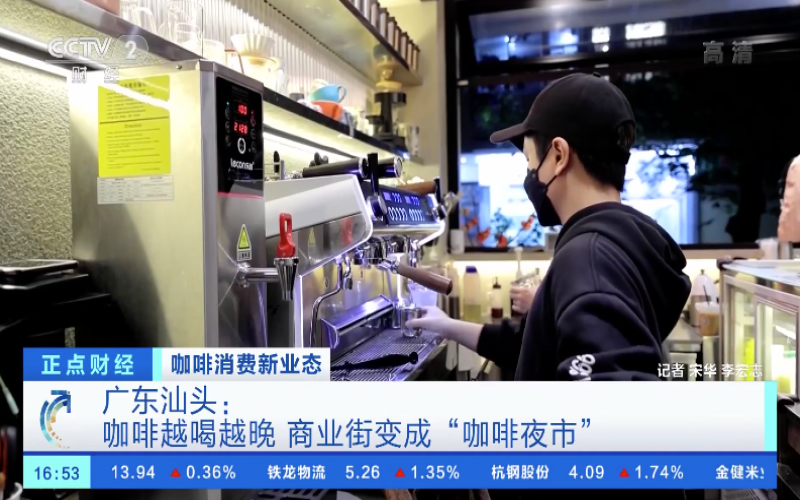
Nighttime coffee consumption is gradually becoming a new trend: coffee night markets are on the rise, and evening hours have become the main revenue driver for shops.
In the past, people used to drink coffee during the day and avoid caffeine at night to prevent it from affecting their sleep. However, as the coffee-drinking crowd continues to grow, a night coffee culture of drinking later and later is quietly emerging among young people. On a commercial street in Guangdong, 14 coffee shops of different styles are clustered within less than a hundred meters. After 9 p.m., every seat is taken, and the bustle is no less lively than a food night market. Some stores stay open until the early morning or even operate 24 hours without closing, and revenue from 8 p.m. to the early morning can account for more than 70 percent of the whole day's sales. This "small shop + outdoor" business format satisfies both the essential daytime demand and the nighttime social scenario, and also offers boutique coffee shops a new way to seek growth amid fierce competition. [more…]
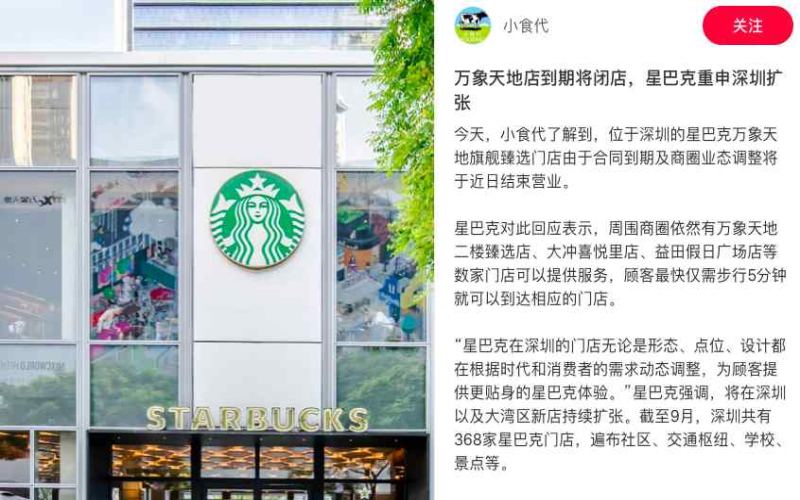
After nearly eight years in operation, Starbucks' first Reserve flagship store in South China has announced its permanent closure, and the standalone store in Shenzhen MixC World will change hands.
Starbucks' first Reserve flagship store in South China—the two-story standalone store at Shenzhen MixC World—will officially close permanently after business hours on October 12. This iconic store, which had been open for nearly eight years, was once the largest standalone Starbucks in Shenzhen, and it now comes to an end due to the expiration of its contract and adjustments in the business district's tenant mix. After the news spread, many regular customers felt deep regret. At the same time, Starbucks has also been closing stores at multiple locations in Shenzhen, sparking speculation about adjustments to its market layout. This article will review the store's history, customer reactions, the reasons for its closure, and Starbucks' response, along with related recommendations from Front Street Coffee. [more…]
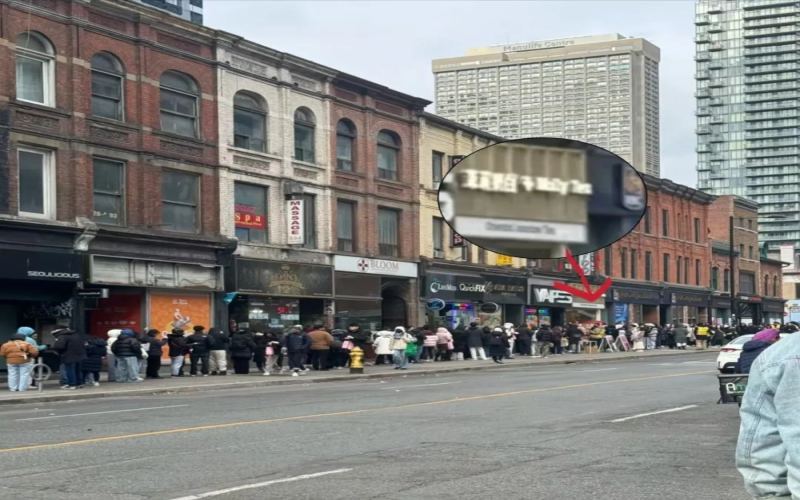
Jasmine Naicha's first Toronto store suspected of vandalism, netizens speculate it points to industry competition and a homeless intrusion
Molly Tea's first Canadian store opened in Toronto at the end of last month, drawing an unprecedented queue on its opening day. However, just half a month into operation, the store was apparently vandalized, with a large hole smashed in its glass door and shattered glass strewn across the floor, while customers were told by staff that opening would be delayed. The incident sparked concern among fans, with speculation running rampant in the comments section that "Chahuanong did it," to which Chahuanong's official Canadian account responded with "???" Some netizens also suggested it could have been the work of a drunk person or a homeless individual, and some even floated theories based on the ambiguity of the English name "Molly." Two hours later, Molly Tea's official Canadian account stated that the store had resumed operations, but offered no explanation for the incident. This article walks you through what happened and how all parties responded, along with Front Street Coffee recommendations and product information. [more…]
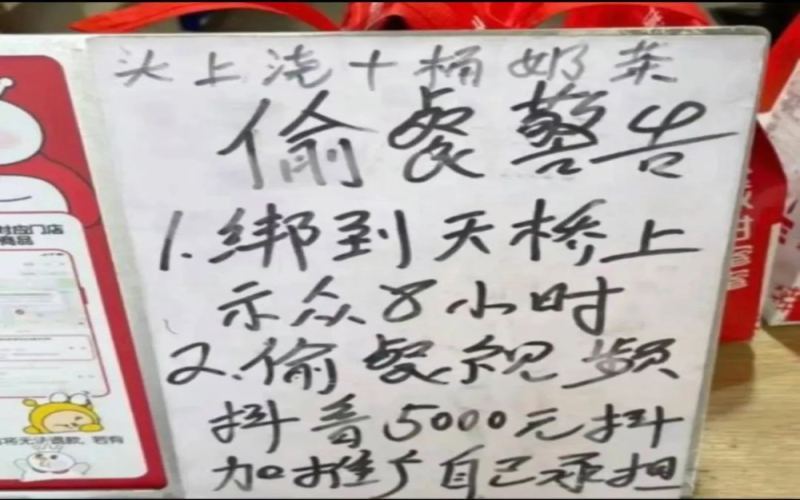
Handwritten warning against meal theft at a Mixue Bingcheng store sparks debate: threat to tie offenders to a pedestrian bridge for public shaming; lawyer says vigilante punishment is illegal
Recently, a Mixue Bingcheng store in Guangzhou made trending searches after posting a handwritten warning about meal theft, stating that thieves would be tied to an overpass for eight hours, have ten buckets of milk tea poured on their heads, and have their videos exposed. The store responded that it was just a scare tactic and had never actually been carried out. The incident sparked heated discussions among netizens, with some sympathizing with the merchant's helplessness, while others pointed out that taking the law into one's own hands is suspected of being illegal. Suzhou police then spoke out, emphasizing that illegal detention is unacceptable and that one should call the police immediately. This controversy reflects the real dilemma of frequent meal theft in the milk tea industry and high loss prevention costs, and also prompts people to think about the balance between merchants defending their rights and the boundaries of the law. [more…]
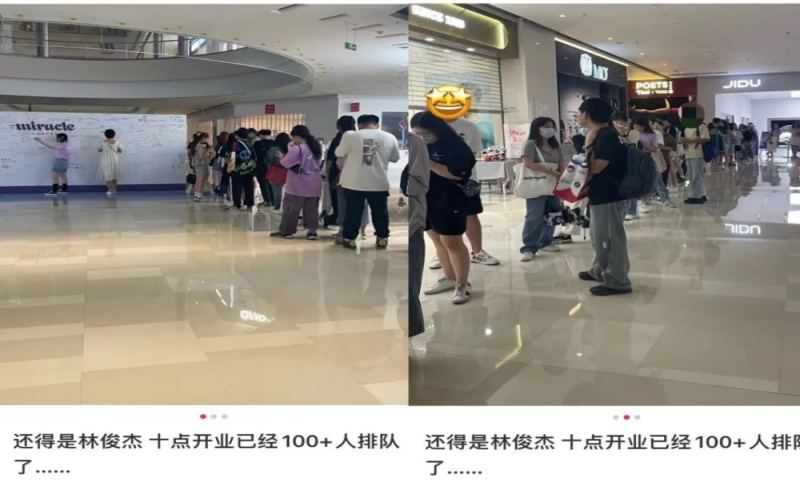
JJ Lin's coffee brand opens a pop-up store in Nanjing on Qixi, with fans queuing for hours to check in.
Lin Junjie's coffee brand Miracle Coffee recently restarted in mainland China, with its first pop-up store opening on Qixi Festival on the 1st floor of Huacai Tiandi in Hexi, Nanjing. Although it is only a pop-up format, fan enthusiasm has not diminished. On the first day of opening, a long queue formed before business hours, with waiting times generally 2 to 3 hours during peak periods, and some even waited 5 to 6 hours to successfully check in. The production team for this Miracle Coffee is the champion-level brand S.O. The official Nanjing store has also begun renovation and is expected to open at the end of September, when Lin Junjie is expected to appear in person. [more…]

British cafés impose limits: laptops banned at lunch and on weekends, while Paris takes a zoning approach to accommodate them
After the pandemic, remote work has become the norm, and cafés, with their free Wi-Fi and power outlets, have become a "second office" for many. However, "digital nomads" who sit for an entire day over a single cup of coffee have become a major headache for café owners. Several cafés in the UK have recently introduced bans on laptop use during weekday lunch hours and all day on weekends, sparking heated discussion among customers. Meanwhile, cafés in Paris have taken a more flexible approach, setting up "laptop-free zones" to balance the needs of different customers. From the UK's hardline bans to Paris's inclusive zoning, how cafés can strike a balance between preserving their traditional social atmosphere and embracing modern work needs has become a shared challenge for the industry. Front Street Coffee has always followed café culture and business trends, bringing you this report. [more…]

Independent coffee shop losing 40,000 a month: with such a huge investment, should they persevere or cut their losses?
People keep entering the coffee industry, and others quietly bow out. One café owner invested nearly 2 million yuan upfront and is now losing as much as 40,000 yuan a month, so he launched an online poll asking whether he should keep going. Faced with steep transfer fees, rent, and operating costs, eighty percent of netizens advised him to cut his losses in time. The owner ultimately decided to fight on for four more months, trying to save himself by adding food combos, extending business hours, and creating an atmospheric space. This article lays out in detail his entrepreneurial predicament, netizens' views, and the overall state of the coffee industry, offering a reference for coffee lovers and entrepreneurs. [more…]
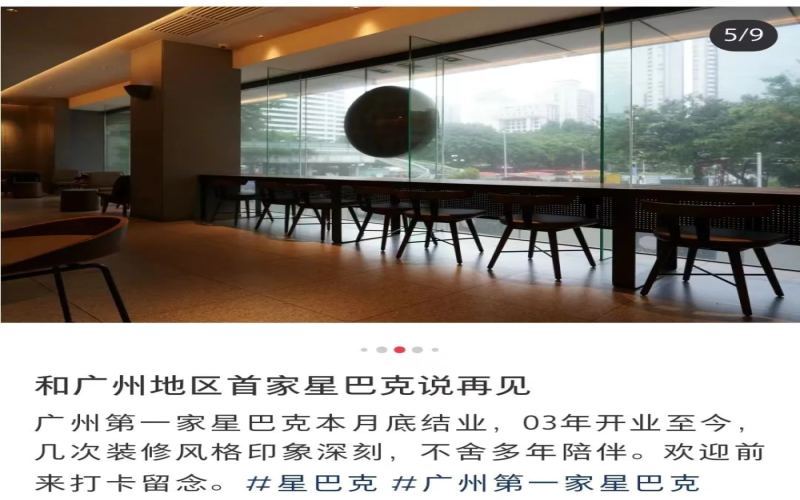
Starbucks' first Guangzhou store is about to close: behind the changes of 24-hour stores and the wave of old store closures
Recently, the news that Starbucks' first store in Guangzhou is about to close has attracted widespread consumer attention. This coffee shop, once famous for being open 24 hours, holds countless memories and emotions for many people. From adjusting its business hours during the pandemic to now facing closure, its departure is not only the end of a store but also reflects the balancing challenge Starbucks faces between expansion and optimizing its layout. Meanwhile, long-established stores in Shenyang, Hong Kong, and other places have also successively announced the end of their operations, with longtime customers expressing their reluctance. This article will take you through the story of this first Guangzhou store, as well as the market logic behind Starbucks' recent store closure trends. [more…]
Community Coffee Shop Startup Guide: A Comprehensive Analysis of Positioning, Location, and Operational Strategies
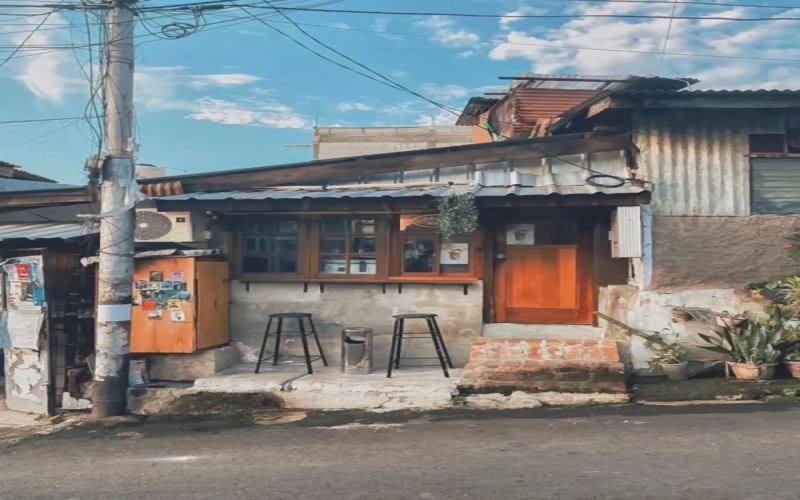
Community coffee shops are becoming a new sight in urban neighborhoods. Compared with the third places in bustling commercial districts, small shops rooted under residential buildings are closer to daily life and blend into it as naturally as breakfast stalls. Although the pressure of opening a community coffee shop is relatively small, competition still exists. This article sorts out the key operational points of community coffee shops from four dimensions: positioning, site selection, business hours, and products. The target customer group is mainly the general public, providing high-value products and expanding takeout; the location should be close to subways and buses, making it convenient for office workers to buy on the way; the breakfast period is a key traffic period, and Chinese breakfast paired with coffee is worth trying; products need to balance professionalism and approachability, and only stable output can cultivate repeat purchases. Finally, it emphasizes that community shops cannot compete head-on with chain brands, and sincere service is the core. [more…]
A Qingdao seaside cafe caught up in an online harassment storm; the shop clarifies it did not eject customers or insult anyone, Front Street Coffee interprets the boundaries of the service industry
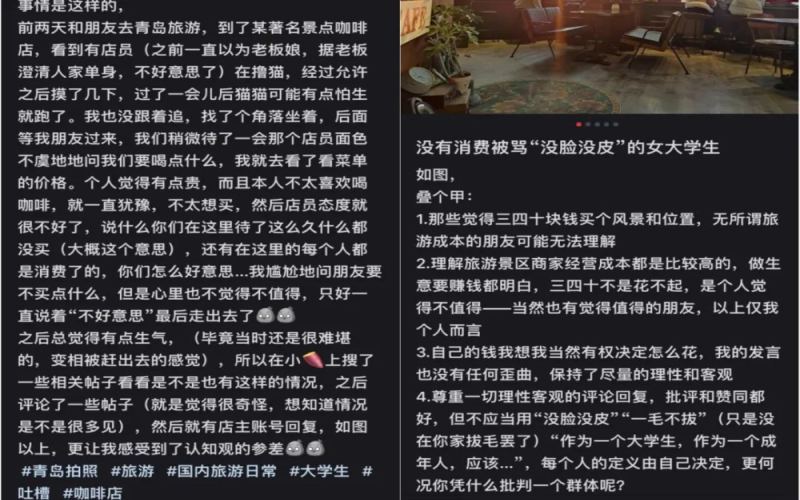
Recently, a clarification post about a café at a scenic spot in Qingdao sparked widespread discussion on social media, with comments quickly climbing to thousands. The incident began when a tourist claiming to be a university student posted about an unpleasant experience at the café, saying they were indirectly driven out by staff for not making a purchase, and later claimed to have been insulted. However, as the business came forward to recount what actually happened, the situation took a turn, and the original poster eventually apologized voluntarily. This controversy not only reflects the differing perceptions between consumers and service venues regarding occupying seats, spending, and service, but also prompts a reexamination of the operational difficulties faced by cafés at tourist attractions during holidays. Today, Front Street Coffee walks you through the full story. [more…]